
01
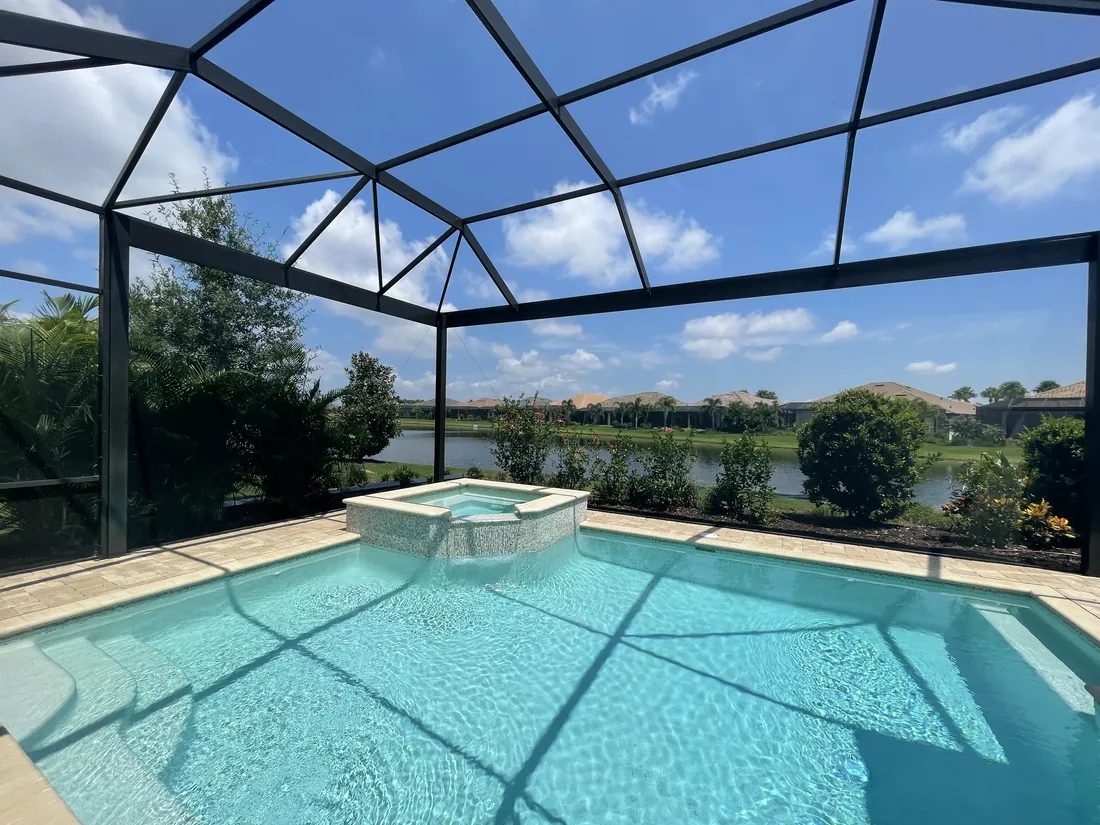
Pool cage screen repair
If the frame is sound, screen alone is a fraction of the cost of a new cage.
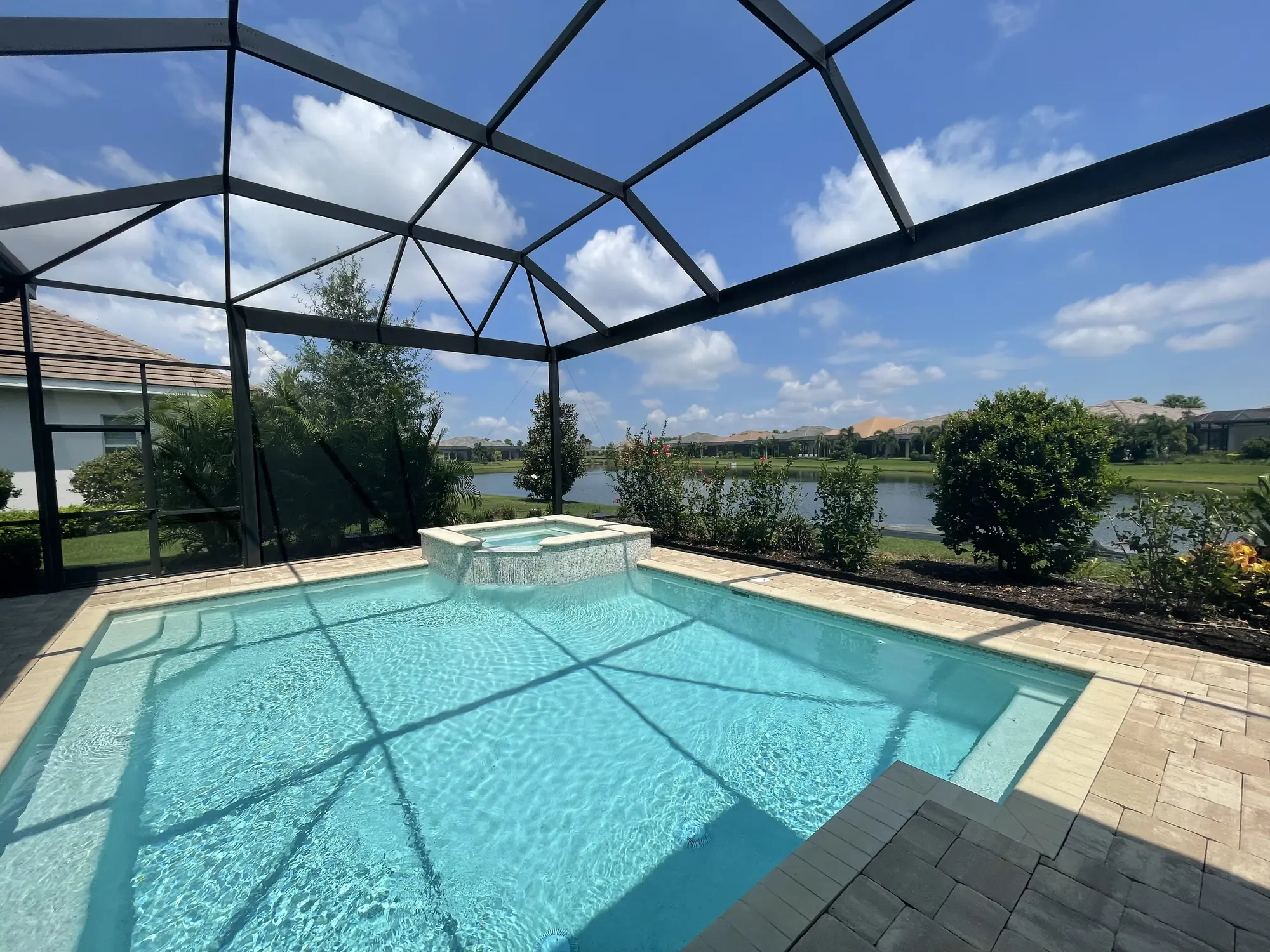
When the frame is corroded through, storm-damaged or simply forty years old, new screen will not save it. We design, permit and build the replacement — mansard, gable or dome, in white or bronze — and meet the county inspector at the end.
When it is time
Screen is cheap. Frame is not. The question is always whether the aluminum still has years in it.
Look at the base of the uprights and at the anchors where the cage meets the deck. That is where salt air and standing water do their work, and it is the first place a cage fails. Surface chalk is cosmetic. Rust bleeding out of a fastener, a screw that spins without biting, or an upright you can flex by hand is structural.
A cage built before current wind-load requirements may also affect insurance requirements or coverage options. If yours predates current code requirements, replacement brings the new enclosure up to current requirements along with the new screen — and refinishing an unsound frame only hides the problem for a season.
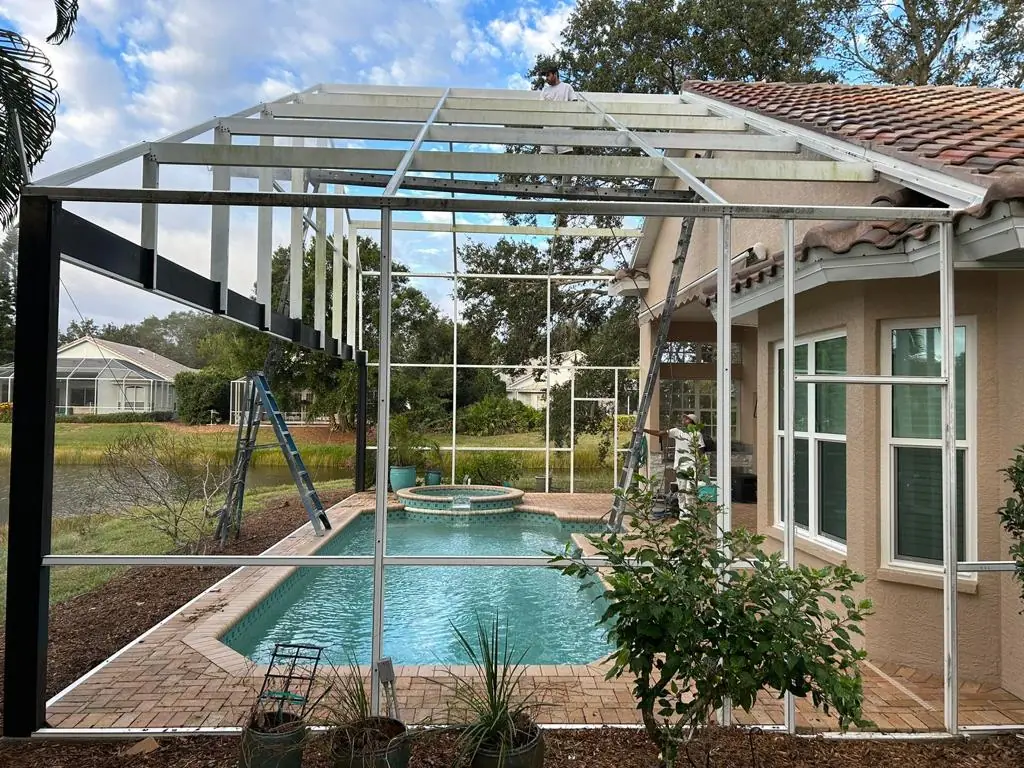
Shape and finish
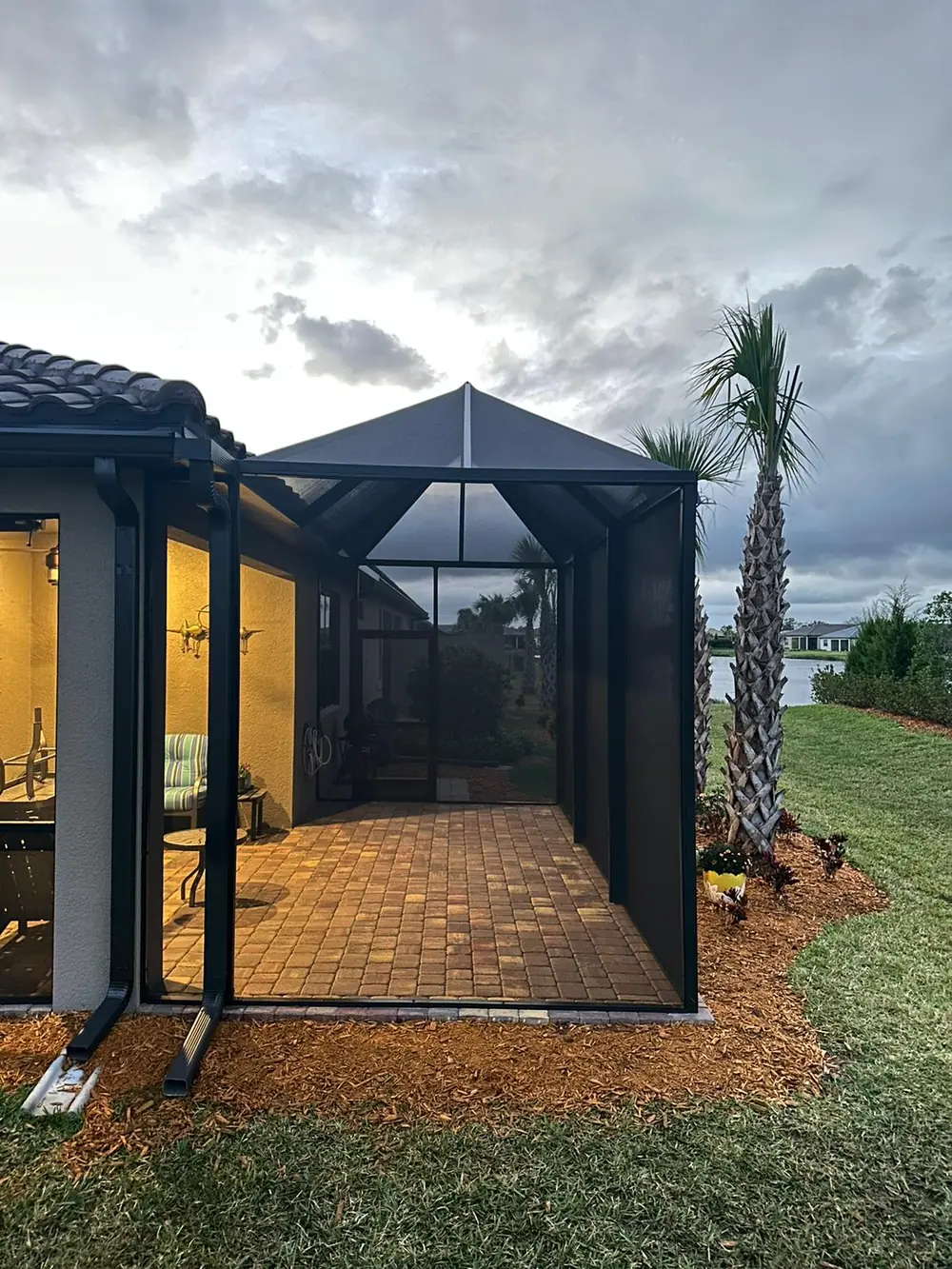
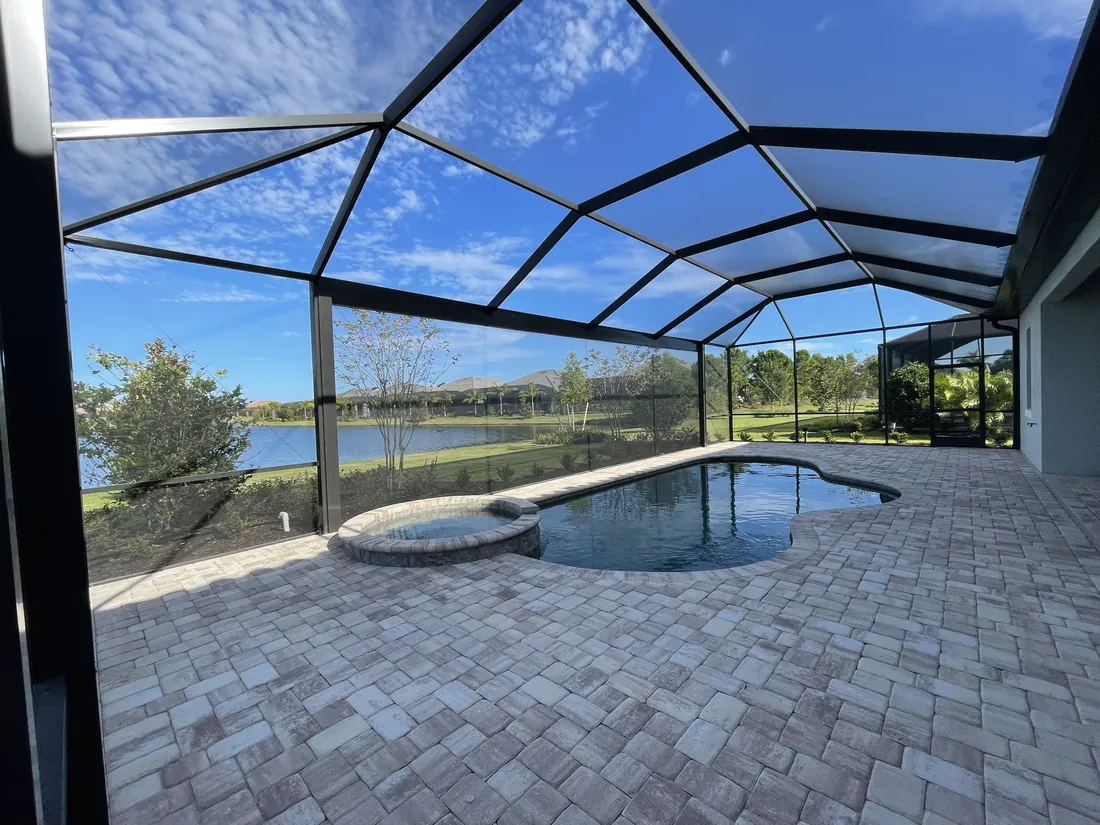
The roof style decides how much sky you see, how the cage sheds rain, and a good part of the price. We finish in white and bronze.
The Florida standard. Sloped sides meeting a flat top — the most economical span, the lowest profile against the house, and the easiest to rescreen later.
A peaked roof that carries height over the pool and sheds water fast. Costs more in material and gives back a taller, more open feel over the water.
A curved span for the widest openings. The most expensive of the three and the one that reads least like a cage from inside.
White disappears against a light house and shows dirt least. Bronze recedes visually and is what most lakefront and preserve lots choose, because the frame stops competing with the view.
The part nobody advertises
A new pool cage is a permitted structure. Anyone offering to skip that step is handing you a problem that surfaces when you sell the house.
Signed and sealed, showing the cage meets the current wind-load requirement for your address. Not a template — the span and anchor schedule are specific to your deck.
Pulled under CRC1334065 with Sarasota, Manatee or Charlotte County — not under yours as an owner-builder, which is how homeowners end up personally liable for the work.
We prepare and submit the architectural review package. It is a large part of what we do here, and getting the color and profile approved before fabrication saves weeks.
Once the permit is issued, most projects finish within 20 business days. The county issues on its own schedule, which is the part none of us controls — so we start that clock as early as possible.
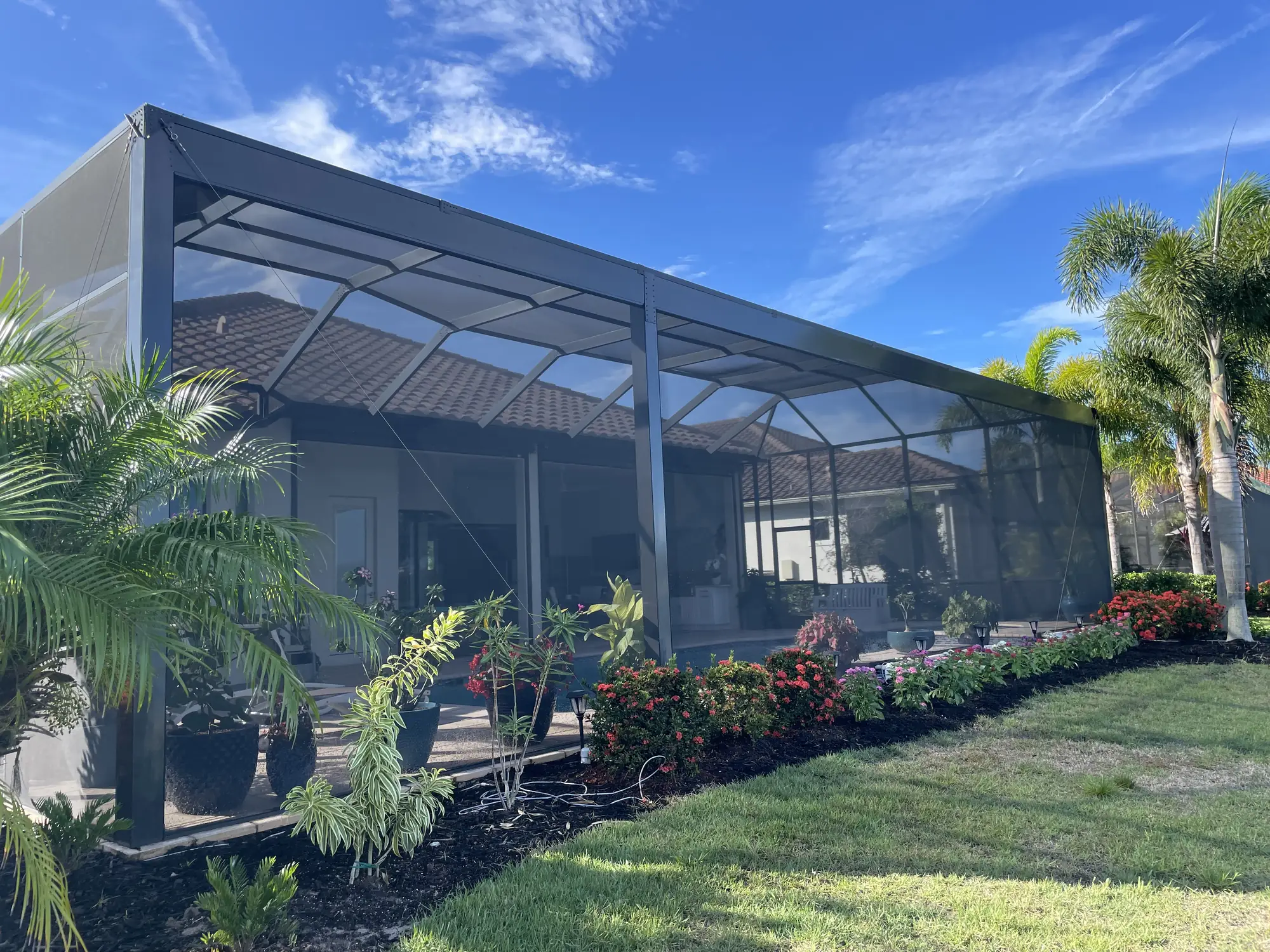
Financing

A new cage is the largest of the jobs we do, and it rarely happens at a convenient time. Prequalify for financing through Wisetack and spread it over monthly payments.
All financing is subject to credit approval.
Questions
Not here? Call (941) 961-0162.
Every project is quoted individually. The footprint, the roof style, the height, the screen you choose and the condition of the deck the cage anchors into all move the number — which is why we measure on site instead of quoting over the phone. The written estimate lists exactly what is included so you can compare it line for line.
Projects up to $65,000 can be financed through Wisetack, subject to credit approval.
Yes. A new enclosure or a structural replacement requires a building permit and engineered drawings showing the cage meets current wind-load requirements, and it gets inspected. We pull it under our own license, CRC1334065, and meet the inspector.
Unpermitted structural work becomes a title problem when you sell the house.
Usually yes, and that is part of what the estimate visit determines. The anchor schedule in the engineering has to match what the deck can actually hold. If the concrete is spalling or the original anchors were undersized, that gets corrected before the frame goes up — it is not a place to save money.
Mansard for most homes: cheapest span, lowest profile, easiest to rescreen later. Gable when you want height over the water and the budget allows. Dome for the widest openings, where it reads least like a cage from inside.
HOA rules narrow this more often than budget does, which is why we submit the architectural package before anything is fabricated.
Most projects finish within 20 business days of the permit being issued. The permit itself is on the county's schedule. You get a scheduled start date in writing, and we tell you the same day if weather moves it.
We document the damage, provide an itemized scope and photographs suitable for a claim, and coordinate with your adjuster. We do not negotiate the claim on your behalf — that is between you and your carrier — but the paperwork we provide is what adjusters ask for.
Related
If the frame is sound, screen alone is a fraction of the cost of a new cage.
A structurally sound frame can go from chalky white to bronze without replacement.
The moment the old cage comes off is the cheapest time to redo the deck underneath.
Get started
Tell us what you need and where the property is. We will call you back to schedule a measurement. Prefer to talk now? Call (941) 961-0162.
Our request form did not load in your browser. Open it in a new tab, or just call — either way we will get you on the schedule for a measurement.
Open the request form Call (941) 961-0162Trouble with the form? Call (941) 961-0162 or email sales@2hrescreening.com. We use your details only to prepare your estimate and never sell your information.