
01
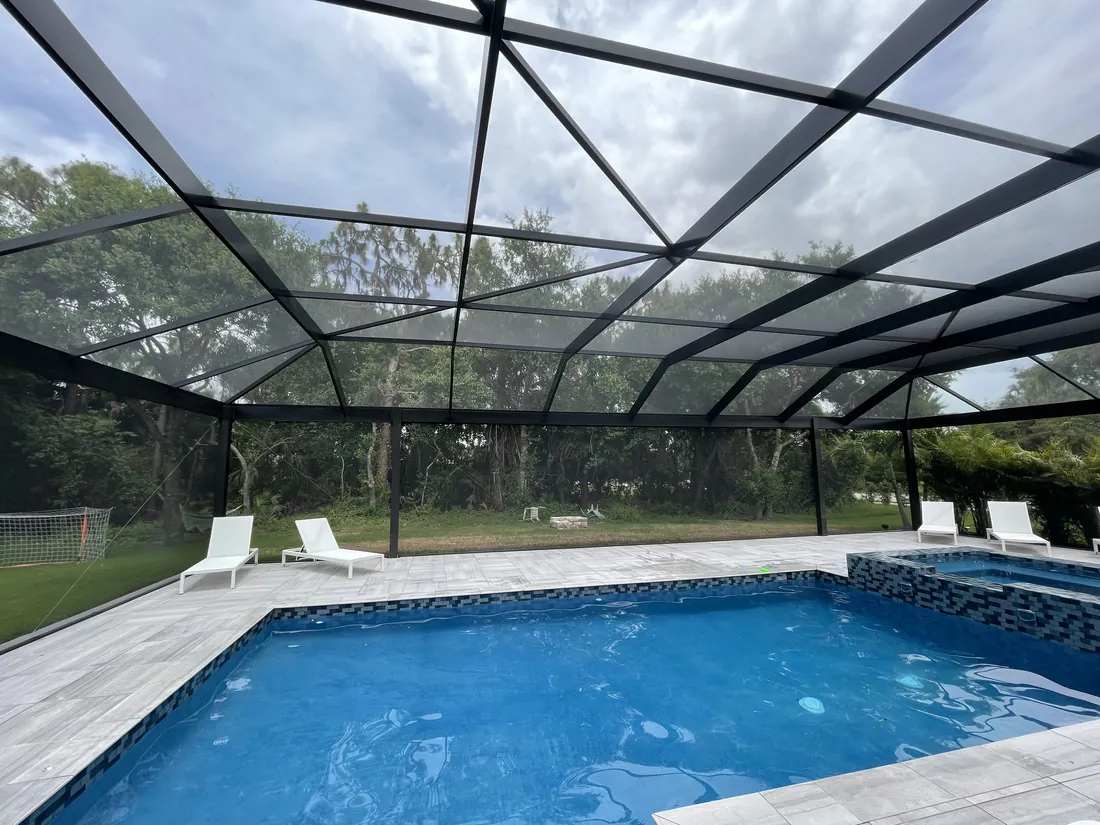
New pool cage
If the cage is coming off, the deck underneath is the cheapest it will ever be.
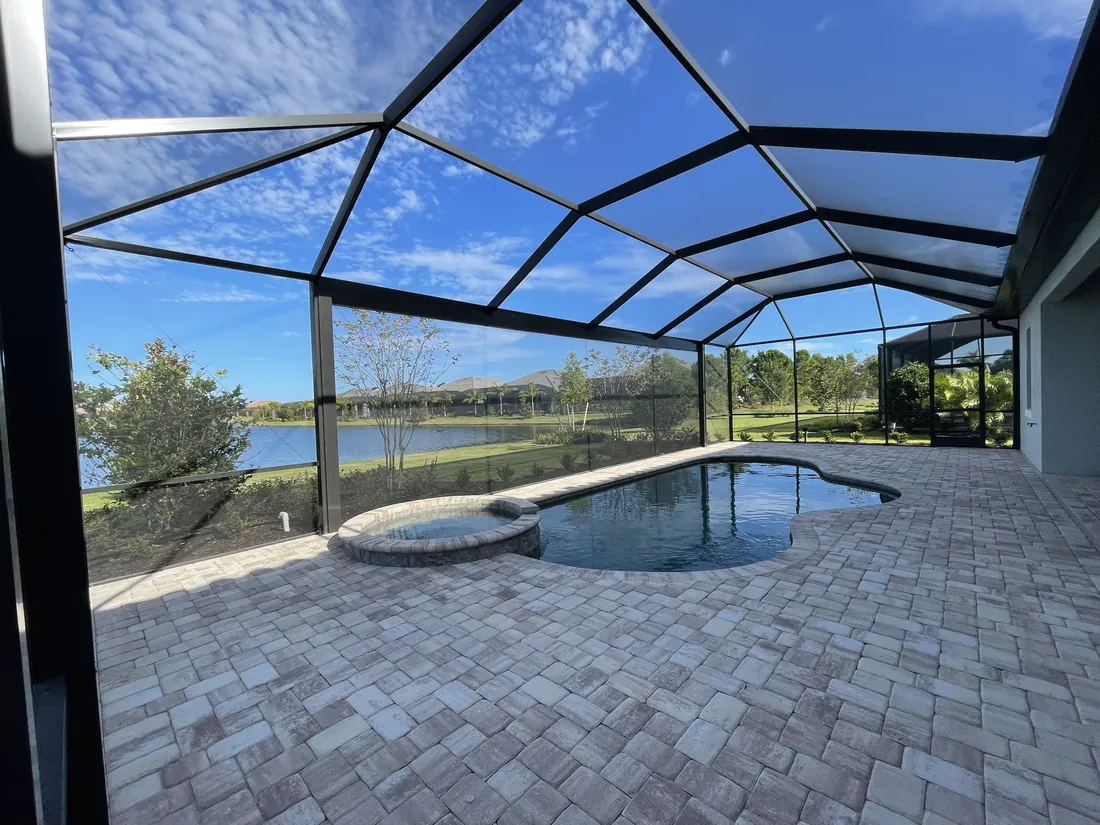
Pavers almost never fail because of the pavers. They fail because somebody skipped the excavation, the edge restraint or the joint sand — the three things nobody sees once the deck is down, and the three things that decide whether it stays flat.
Why pavers move
A sunken paver is a base problem wearing a paver costume.
Excavation depth. A pool deck needs less base than a driveway, and a driveway that will hold a truck needs more than most crews dig. Cutting this is invisible on day one and obvious in the second rainy season, when tyre tracks appear in the entry.
Edge restraint. Pavers rely on the surrounding pavers for support. Take away the edge and the whole field creeps outward a few millimeters a year until the joints open. Many spreading paver patios have failed because this step was missing or inadequate.
Joint sand. Polymeric sand locks the field together and keeps weeds and ants out of the joints. Plain sand washes out in the first storm and takes the interlock with it.
Get those three right and a Florida paver deck has the foundation to stay flat for years. Get one wrong and no amount of good paver fixes it.
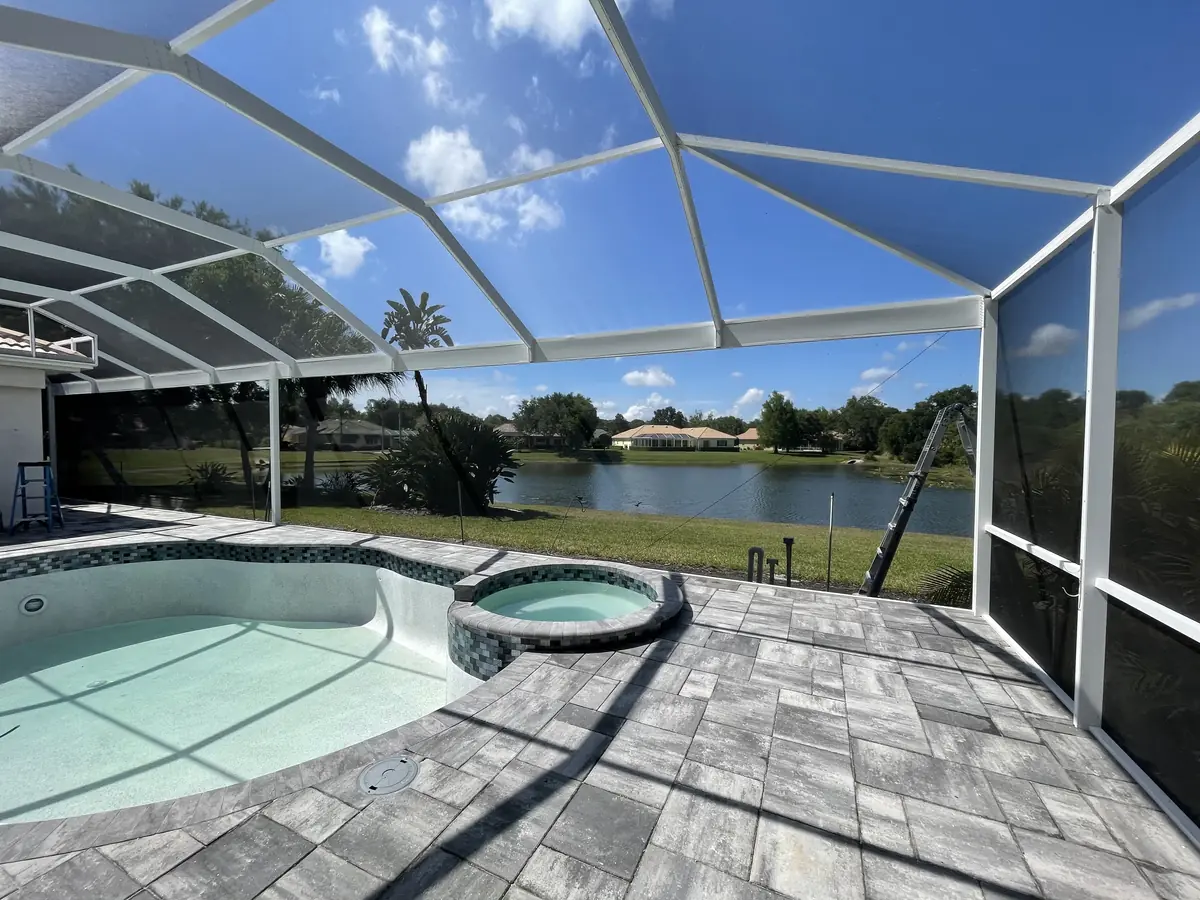
What we lay
Same pavers, very different bases. A crew that builds them all the same way is telling you something.
Slip resistance and heat matter more than load. Travertine stays coolest underfoot; concrete paver holds color longer. The cheapest moment to do this is while the cage is off.
The deepest base of the four, because it carries a vehicle every day. Under-building a driveway is the most expensive shortcut in this trade.
Often laid over an existing slab, which changes the whole build — and requires checking that the slab is sound before anything goes on top of it.
Narrow fields spread fastest, because there is proportionally more edge. This is where edge restraint stops being optional.
Sealing
Sealing is the most oversold service in Florida hardscape. Here is where it earns its money and where it does not.
Locks the joint sand so it stops washing out, resists staining from leaves, rust and barbecue grease, and slows the fading that Florida sun does to color.
It does not hold a bad base together, and it does not stop a deck without edge restraint from spreading. Sealing a failing deck is a coat of paint on a cracked wall.
Not on brand-new pavers — they need to weather first so efflorescence can work its way out. After that, on the cycle the product calls for, and always on a dry deck.
Financing

Prefer to pay over time rather than all at once? Prequalify for financing through Wisetack and spread the cost over monthly payments.
All financing is subject to credit approval.
Questions
Not here? Call (941) 961-0162.
Almost always the base or the edge. Either the excavation was too shallow or the fill was not compacted in lifts, or there is no edge restraint holding the perimeter, so the field creeps outward and the joints open.
Joint sand washing out makes it worse but is rarely the root cause. Re-sanding a deck with no edge restraint buys you a season.
On a well-built deck, yes — it locks the joint sand, resists staining and slows fading. On a deck with a failing base, no: it hides the problem without touching it.
Not on brand-new pavers either. They need to weather first so efflorescence can work its way out, otherwise you seal it in.
Travertine stays noticeably cooler underfoot, which matters on a deck people cross barefoot in July, and it looks more like stone because it is. Concrete paver costs less, comes in more colors and holds its color longer.
Both work. The deciding factor here is usually bare feet in August.
Often yes, and it is common on lanai floors and patios. What matters is whether the slab is sound and whether it drains — laying over a cracked or ponding slab transfers the problem straight to the new surface.
We check that before quoting, and say so when the answer is no.
Quoted individually. Square footage, the paver you choose, how much excavation the base needs and whether anything has to come out first all move the number.
Projects up to $65,000 can be financed through Wisetack, subject to credit approval.
If the cage is coming off anyway, yes — by a wide margin. The crew has clear access, nothing has to be worked around, and the cage anchors go back into a deck that is already at final height.
Doing it the other way means cutting and patching around posts that are already standing.
Related
If the cage is coming off, the deck underneath is the cheapest it will ever be.
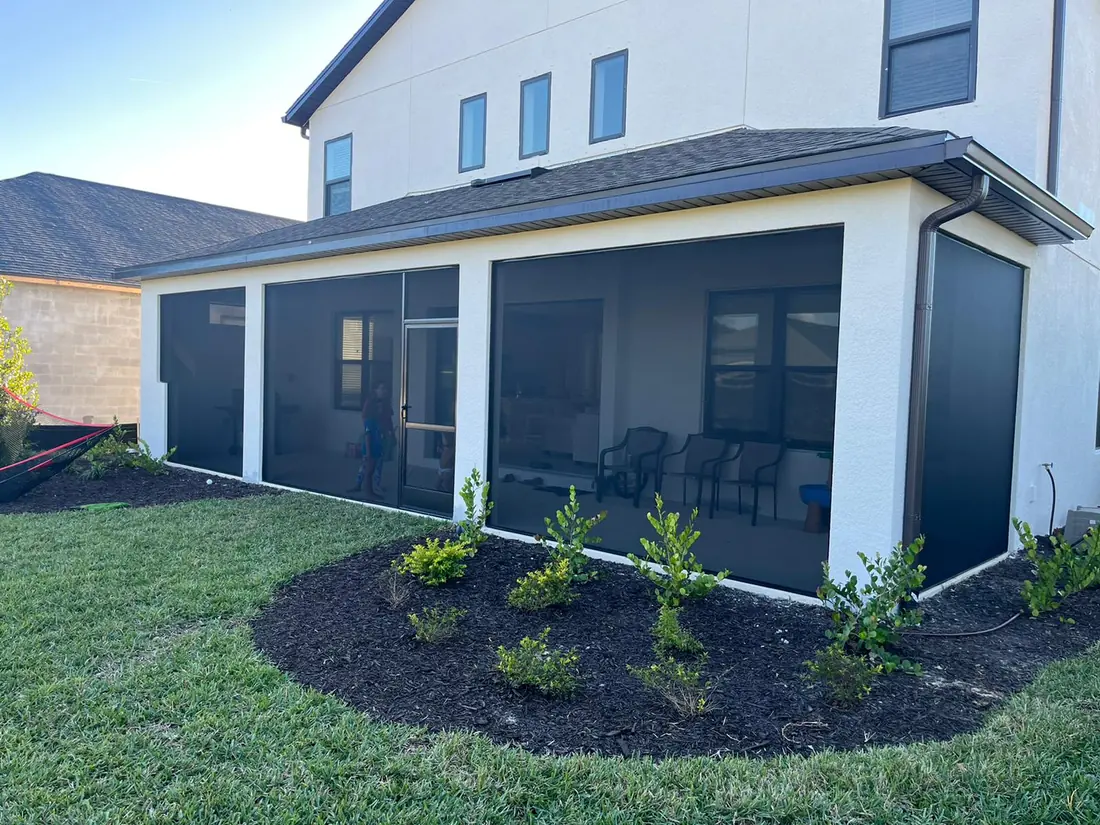
A new lanai floor and the enclosure around it, in one mobilisation.
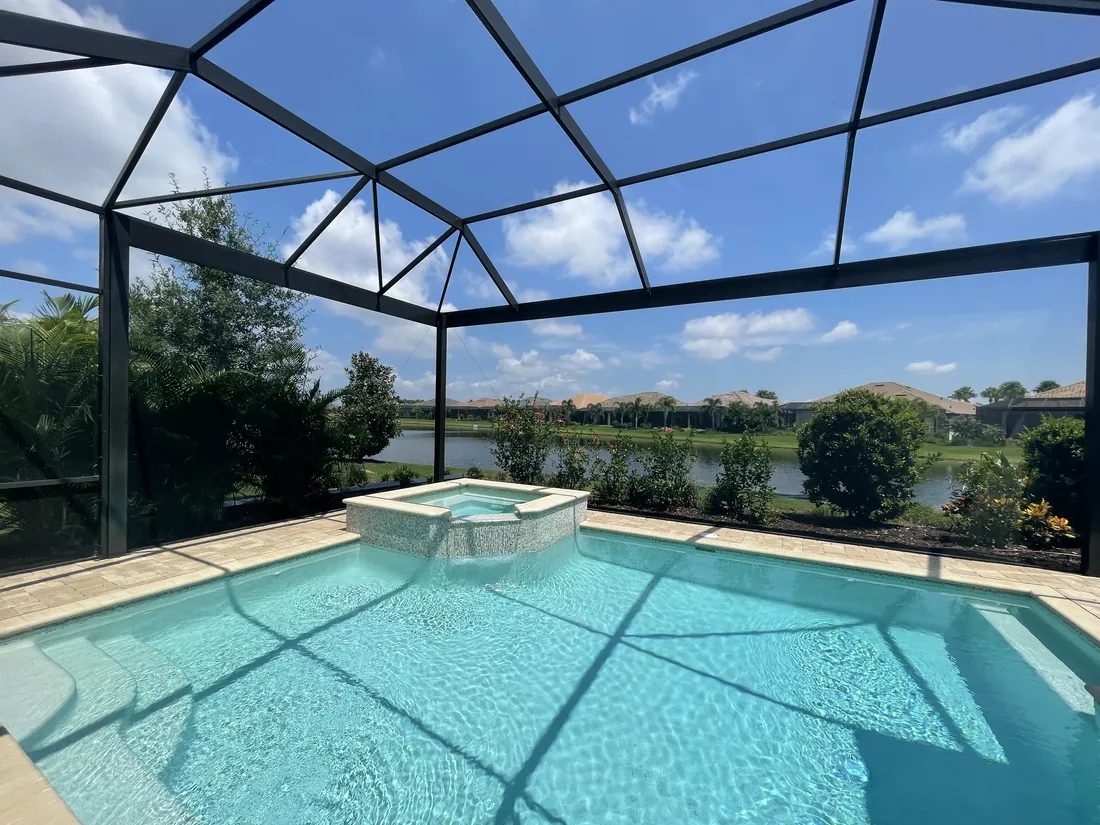
The other half of making an old pool area look new again.
Get started
Tell us what you need and where the property is. We will call you back to schedule a measurement. Prefer to talk now? Call (941) 961-0162.
Our request form did not load in your browser. Open it in a new tab, or just call — either way we will get you on the schedule for a measurement.
Open the request form Call (941) 961-0162Trouble with the form? Call (941) 961-0162 or email sales@2hrescreening.com. We use your details only to prepare your estimate and never sell your information.