
01
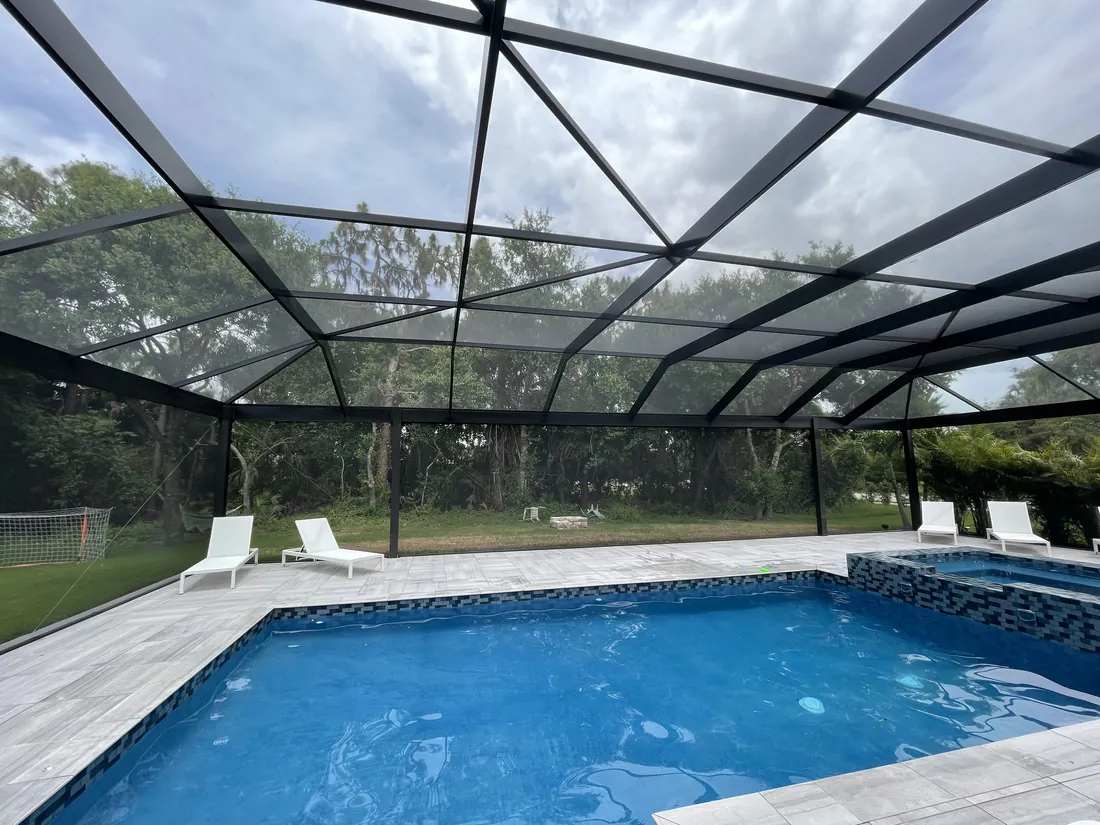
New pool cage & replacement
When the frame itself is corroded or storm-damaged, screen alone will not fix it.
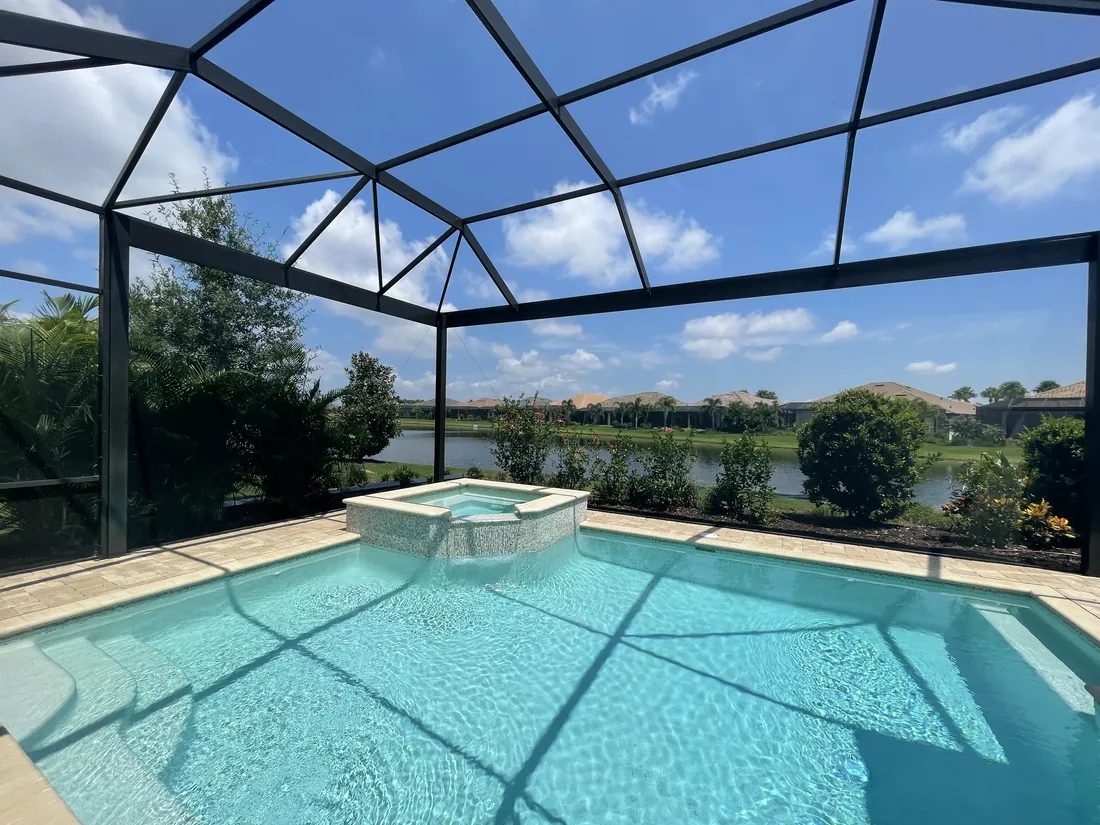
A branch went through it, the dog went through it, or the mesh finally gave up after a decade of Florida sun. We do both jobs — the single panel and the full rescreen — and we tell you honestly which one you actually need.
The decision
Patch it, or rescreen it? The mesh tells you, and it is not a close call once you know what to look for.
Patch the panel when the damage has an obvious cause — a branch, a ladder, a dog. The rest of the screen is still tight, still holds its color, and does not tear when you press it. Replacing one bay is cheaper than replacing forty.
Rescreen the cage when the screen is failing on its own. Press the mesh with your palm: if it gives more than it used to, if it has gone chalky, or if you have already patched two or three bays this year, the material is at the end of its life. Chasing panels one at a time on a cage that is going costs more than doing it once.
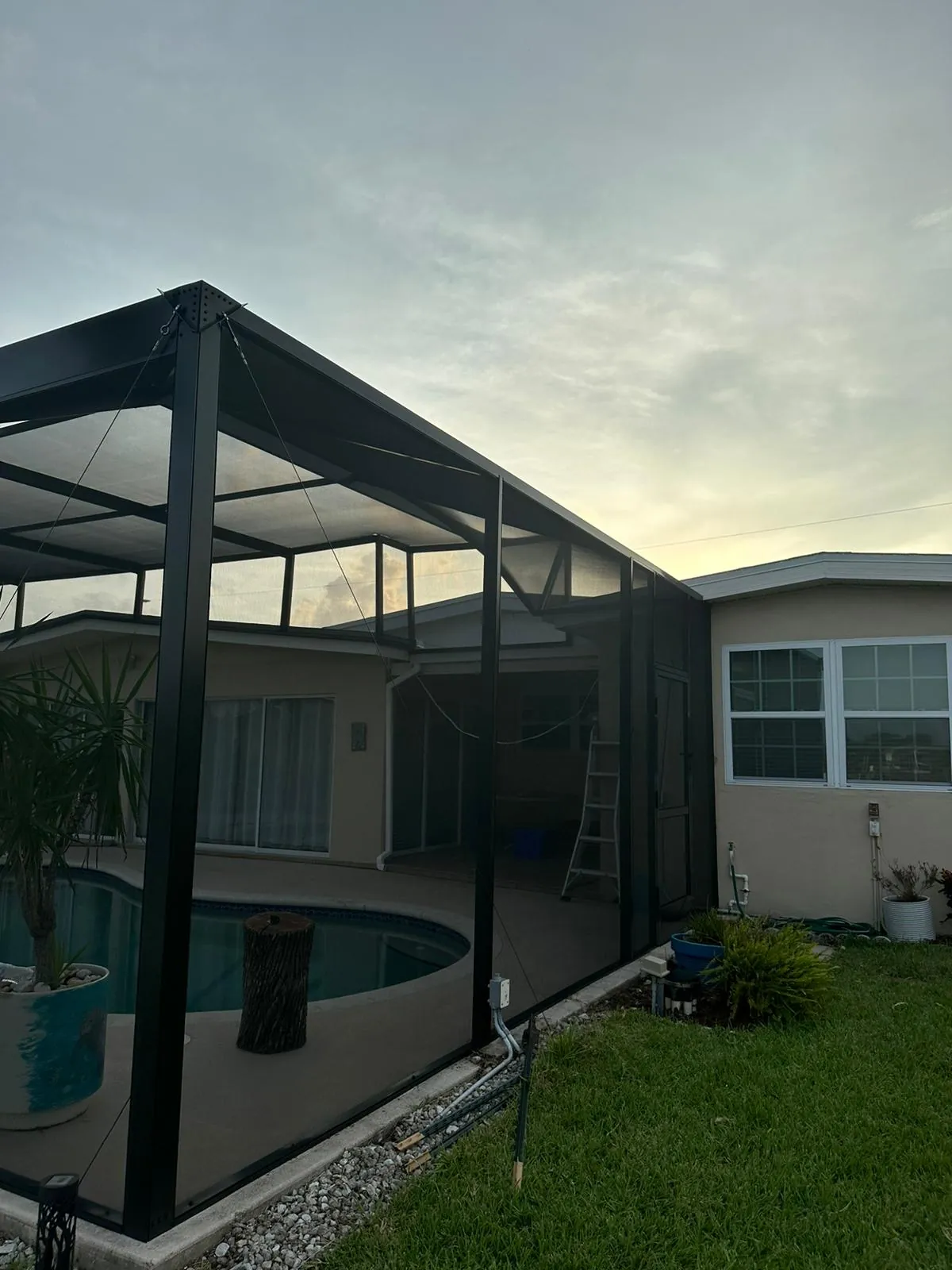
The screen itself
All of it comes through our supplier here in Sarasota, and each carries its manufacturer’s warranty.
The default, made in the USA, and the right answer for most pool cages. Eighteen by fourteen strands per inch keeps out mosquitoes and holds a clear view.
A tighter weave for properties on water. If the midges get through your current screen at dusk, this is the fix — the trade is slightly less airflow.
Heavier weave that takes a dog leaning on it. Most homeowners put it only on the bottom row, where the animals are, and standard mesh above.
Stronger than fiberglass and holds its shape better across wide bays. Costs more up front and lasts longer under Florida sun — worth it on large panels.
How it works
Screen repair does not need a permit when the structure is sound. Most jobs are in and out without disturbing the pool.
Screen sits in a spline groove. If the groove is corroded or the fastener behind it has failed, new mesh will not hold. That check is free and it happens first.
Both. Reusing old spline is the most common shortcut in this trade and the reason screen pulls loose a year later.
Screen goes in with the correct spline gauge for the groove and is rolled to even tension. Too loose it sags; too tight it tears at the corner.
Old material leaves with us, the deck gets swept, and we walk the cage with you panel by panel before anyone signs anything.
Financing

Prefer to pay over time rather than all at once? Prequalify for financing through Wisetack and spread the cost over monthly payments.
All financing is subject to credit approval.
Questions
Not here? Call (941) 961-0162.
Yes, and often we should. A single tear with an obvious cause, on a cage whose screen is otherwise tight, is a one-panel job. We will tell you when that is the case even though the bigger job pays us more.
Three signs: it tears at the spline without anything hitting it, it stretches when you press it with your palm, or you have already patched two or three bays this season. Any one of those means the material is going, not the panel.
Florida sun and salt air are what kill it. Screen on the west and south faces always goes first.
Generally no. Replacing screen on an existing, structurally sound enclosure is not permitted work. A permit becomes necessary when the frame itself is being replaced or altered — and that we pull under our own license, CRC1334065.
On a partial repair, not exactly. New mesh is darker and tighter than screen that has been in the sun for years; the difference fades over a season but it is visible at first. If that bothers you, doing a whole elevation at once instead of one bay is the usual compromise.
Every job is quoted individually. The size of the enclosure, the mesh you choose, the height and access, and the condition of the spline grooves all move the number — which is why we measure on site instead of guessing over the phone.
Projects up to $65,000 can be financed through Wisetack, subject to credit approval.
A panel repair is usually a single visit. A full rescreen depends on the size of the cage. Where a permit is involved, most projects finish within 20 business days of the permit being issued.
Related
When the frame itself is corroded or storm-damaged, screen alone will not fix it.
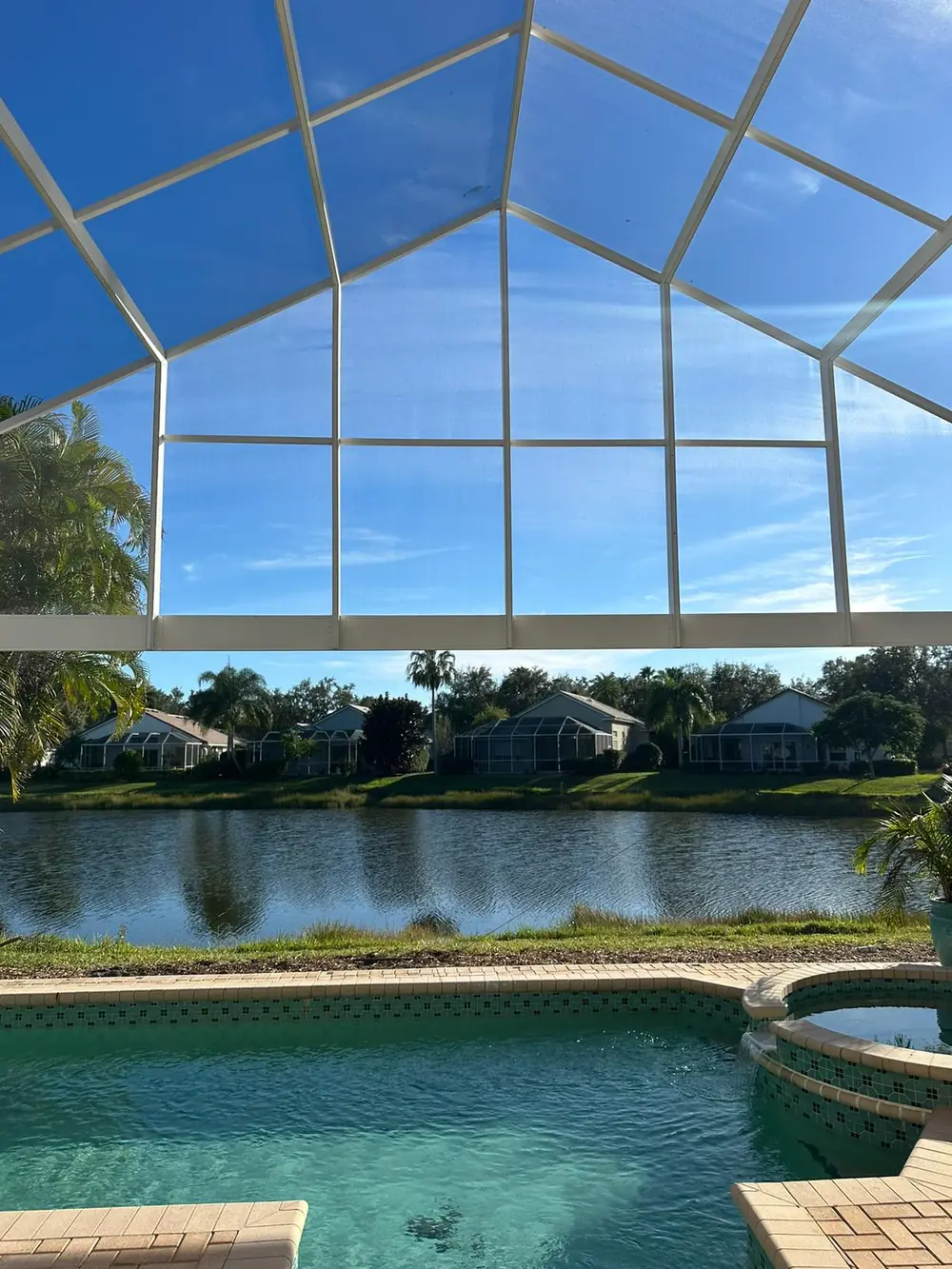
Rescreening is the moment to remove the cross-bars cutting your view into strips.
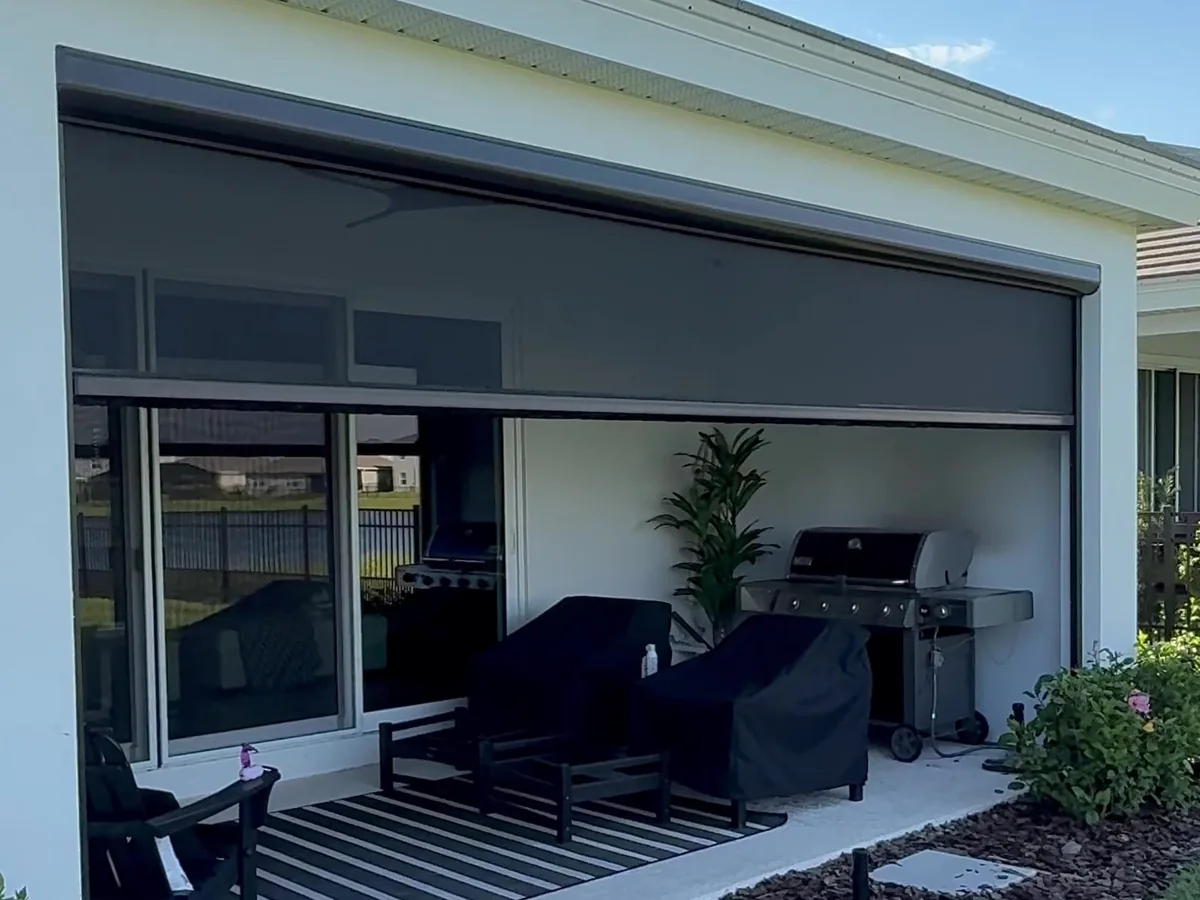
For the opening you want screened in the evening and fully open the rest of the time.
Get started
Tell us what you need and where the property is. We will call you back to schedule a measurement. Prefer to talk now? Call (941) 961-0162.
Our request form did not load in your browser. Open it in a new tab, or just call — either way we will get you on the schedule for a measurement.
Open the request form Call (941) 961-0162Trouble with the form? Call (941) 961-0162 or email sales@2hrescreening.com. We use your details only to prepare your estimate and never sell your information.